
Birds/Plants found in this Garden:
Acorn Woodpecker
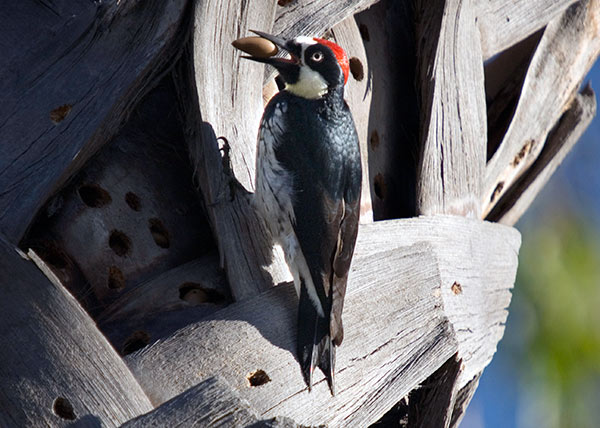
photo by Charlie Morey
Description : Medium sized black and white clown faced bird with a red crown, glossy black and white head.
Diet: Consists of insects, sap, oak, catkins, fruit and flower nectar. Sometimes grass seeds, lizards and bird eggs.
Habitat: Pine-Oak woodlands where oak trees are plentiful. Also found in riparian corridors and in Douglas firs, redwood and tropical hardwood forests as long as oaks are available and near by.
California Scrub-Jay
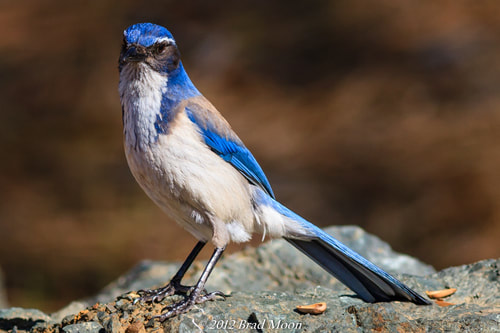
photo by Brad Moon
Description : They have a blue forehead streaked with white eyebrows and a mixture of gray and black around their eyes. Breast, sides and bellies are gray or white and their mantle is brown or black.
Diet: Omnivorous, diet consists of a range of animal and plant material. Fruits such as cherries and Insects such as beetles are some of their main diet.
Habitat: Very dry, open, and hot coastal habitats where human populations are dense. Lower elevations in thick grass, brush, and low shrubs. Often found to be in woodlands with a dense environment.
Bushtit
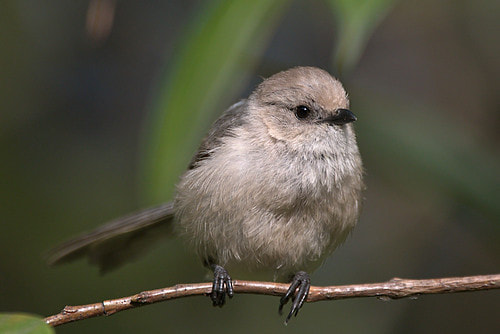
photo by Kevin Krebs
Description : Tiny and kinglet-sized birds. They are plump with large heads and long tails but short with stubby bills. Colors range from brown, gray and black.
Diet: Small insects and spiders, including the smallest ones that are living on leaves and twigs. They do eat plant material but its less common for them to do so.
Habitat: Open woods or scrubby areas, particularly pine-oak woodlands and chaparral. They also live in scrubs, sagebrush and streamside woods.
White Sage
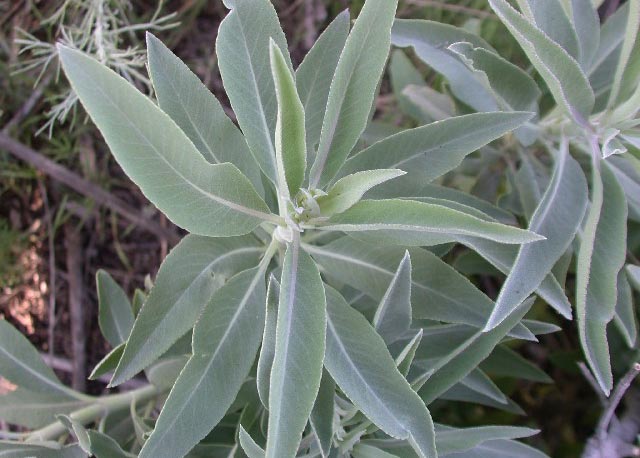
photo by Carol Aronson
Scientific Name: Salvia apiana
Description: Native to the southern coast ranges and inner mountains of California, this plant was used by Native American for food, medicinal, and spiritual purposes.
California Fuchisa
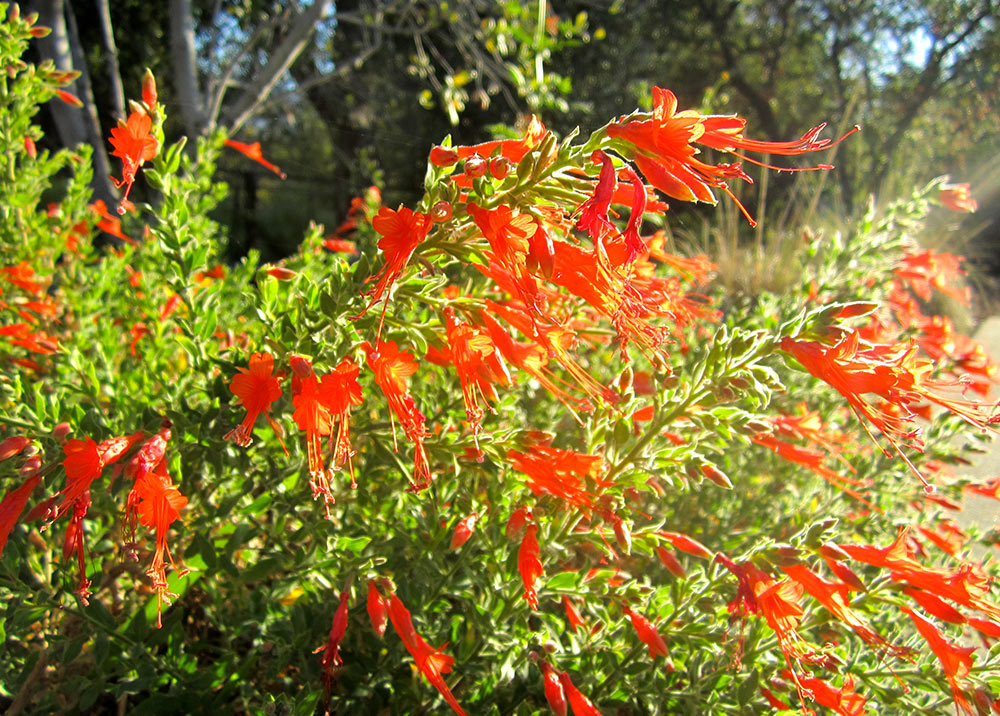
photo by Sandy Masuo
Scientific Name: Epilobium canum
Description: Found throughout the Southwest, this plant is an important nectar source for hummingbirds due to its late-season blooms.Toyon
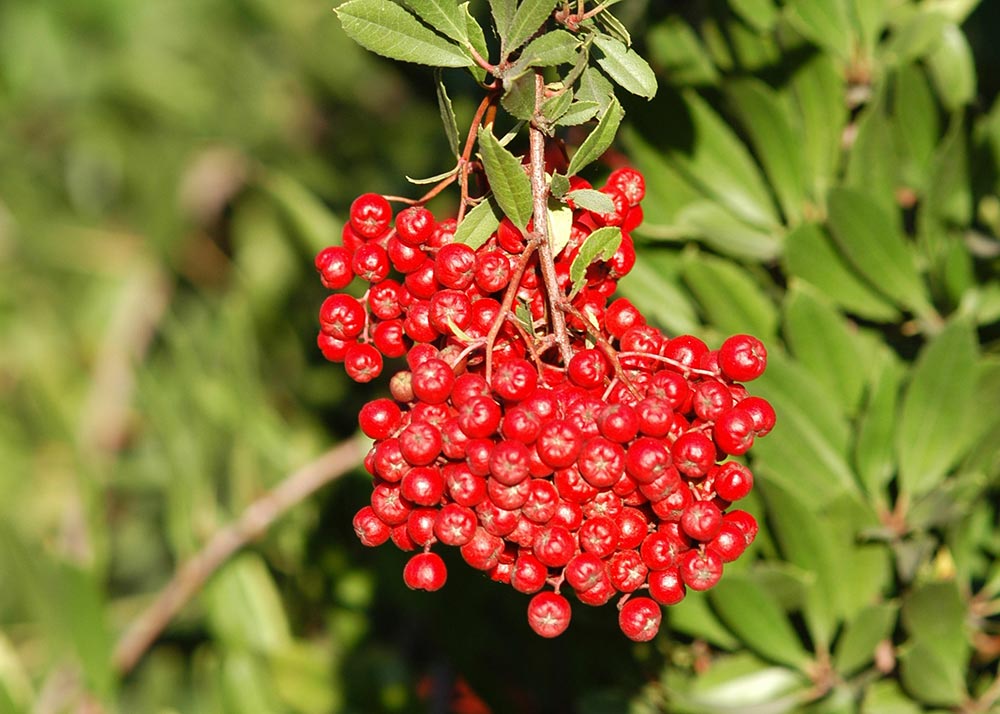
photo by Bob Wickham
Scientific Name: Heteromeles arbutifolia
Description: Toyon occurs in chaparral communities throughout much of California. In 2012 Toyon was named the official native plant of the City of Los Angeles.